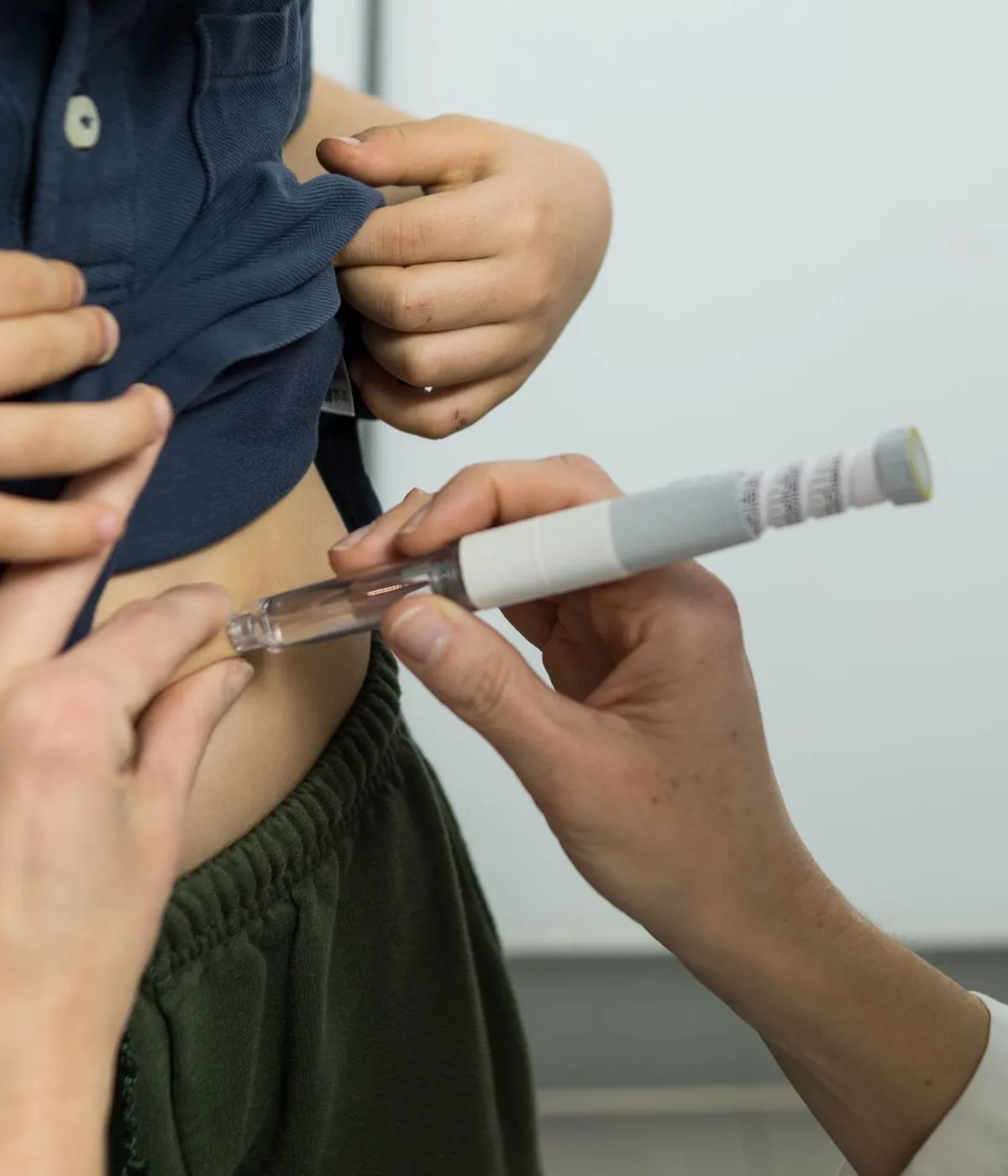
The go-to for muscle repair and exercise recovery.
Explore BPC-157You train on Monday and you are still feeling it on Thursday. The soreness lingers, the next session suffers, and the progress you are working for starts to stall. Recovery is where your body adapts, repairs, and grows stronger, and it tends to slow down with age, short sleep, and a heavy schedule. Rx2BFIT builds physician-guided recovery plans around peptide therapy that works with your body's own repair signals.
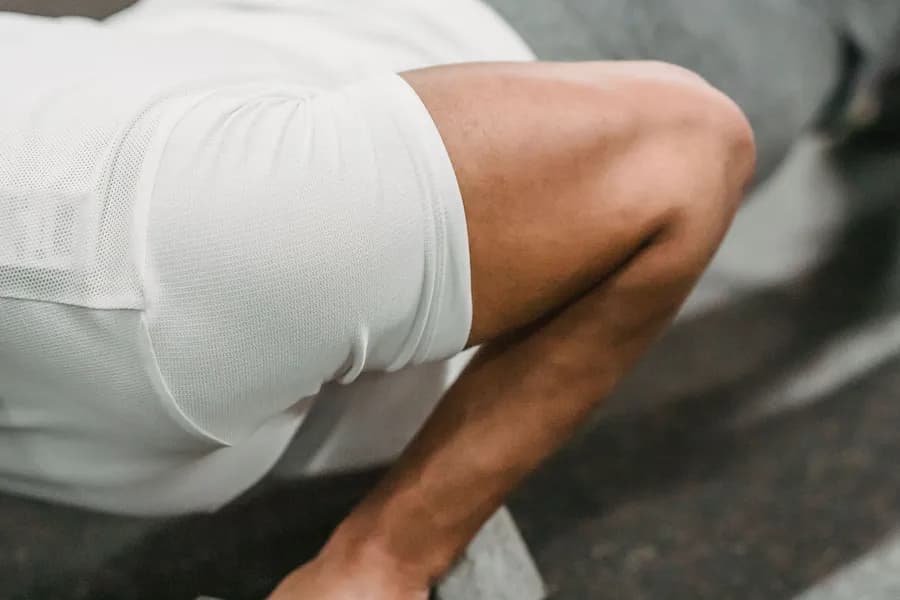
A workout does not make you stronger by itself. It places stress on muscle, tendon, and connective tissue, and the gains come afterward, when those tissues sense the load they were put under and rebuild to handle it. If the rebuilding is not finished before the next hard session, you start that session already behind. Do that for weeks and the result is fatigue, stalled progress, and a higher risk of injury.
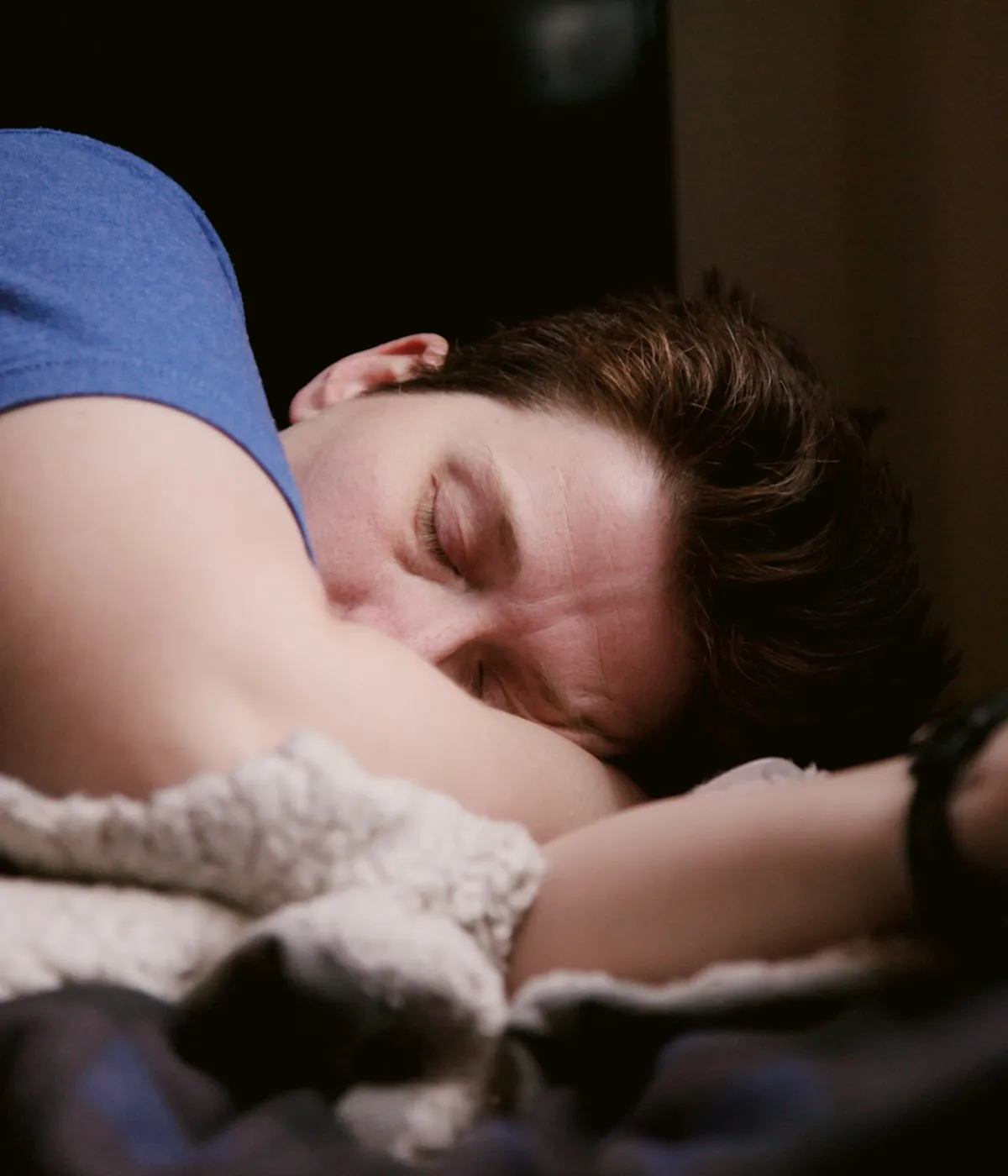
Much of that repair work is tied to growth hormone. Your pituitary gland does not release it in a steady stream. It comes in bursts, and the largest bursts arrive at night during deep sleep. Both deep sleep and those nighttime bursts shrink as we get older. In one study of healthy men, deep sleep fell from about 19 percent of the night in early adulthood to under 4 percent by midlife, and growth hormone output fell alongside it.
That is a large part of why the training load you shrugged off at 25 can flatten you at 45. It is also why the basics still do most of the work: enough sleep, enough protein, and a program that increases gradually instead of all at once. Peptide therapy is meant to support those repair signals, not to replace the habits that drive them.
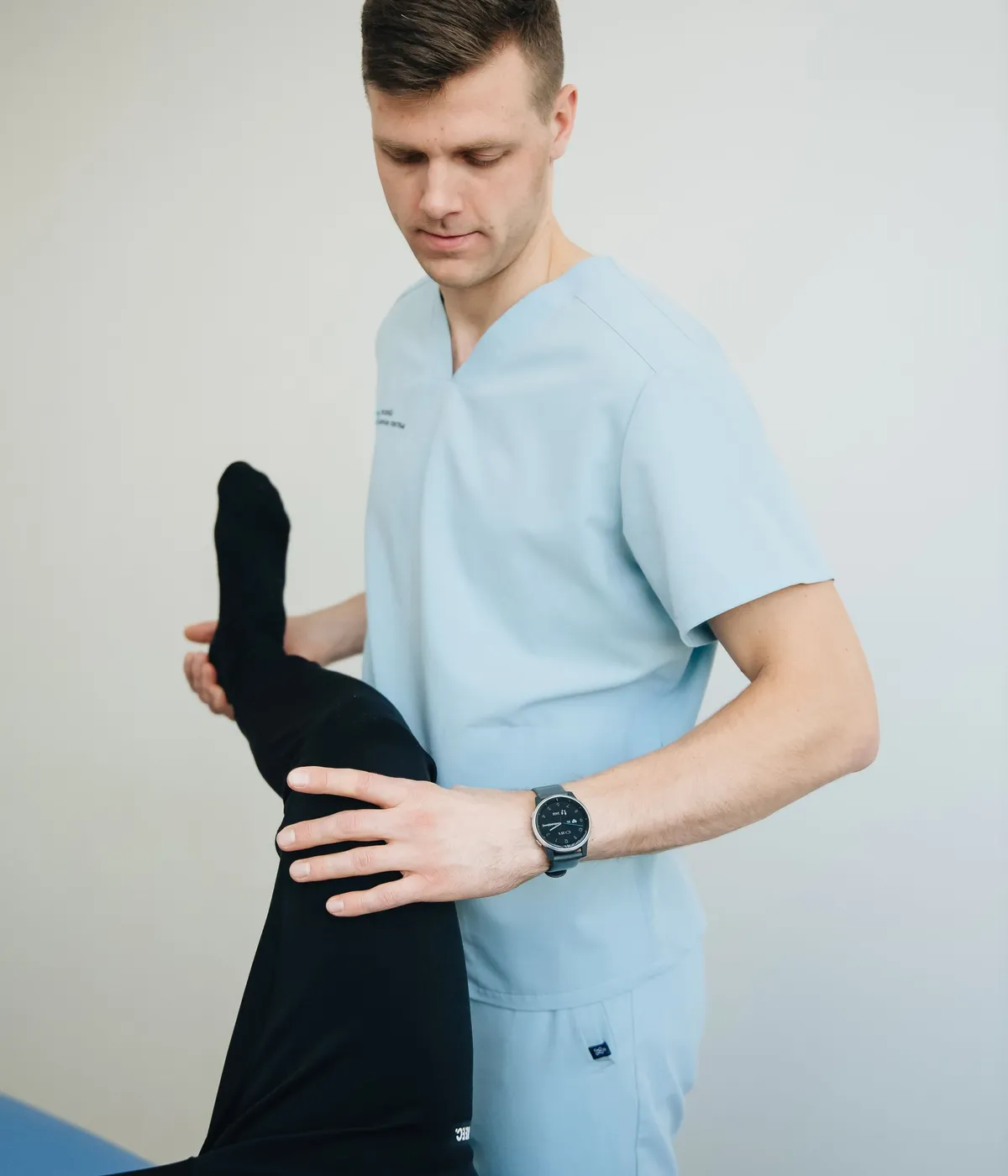
Slow recovery can also point to something a peptide will not fix, such as a medical issue, a medication, or a training plan that asks too much. Sorting that out is the first job of the free assessment with Dr. Patel.
The four treatments we use for slow recovery fall into two families. One is aimed at the tissue doing the repairing. The other is aimed at the growth hormone signal that helps coordinate it.
BPC-157 is a synthetic peptide based on a fragment of a protein found in the stomach, and it is commonly used to support recovery of muscles, tendons, ligaments, and joints. In laboratory studies, injured muscle and tendon in rats healed faster with it, which is where its reputation comes from. Controlled human trials for muscle or tendon recovery have not been done, and our article on what BPC-157 is lays out exactly what the research does and does not show.
The Wolverine Blend pairs BPC-157 with TB-500, a synthetic fragment of thymosin beta-4, a protein involved in how repair cells move toward damaged tissue. The two are combined because they are thought to act on different parts of the healing process. It is the option we discuss with athletes and very active patients, or when recovery follows an injury or surgery.
Tesamorelin / Ipamorelin and Sermorelin take the second route. They do not supply growth hormone. They prompt your pituitary to release its own, in short bursts that stay under the body's normal feedback control. Sermorelin copies part of the brain's natural release signal and is used for steady, long-term support. The tesamorelin and ipamorelin pairing reaches the same gland through two different receptors, and may suit patients who also have body composition goals.
You deserve a straight account of the evidence. BPC-157 and TB-500 are not FDA approved for any use, most of what is known about them comes from animal and laboratory studies, and their long-term safety in people has not been established. A branded tesamorelin product is FDA approved only for excess abdominal fat in adults with HIV, which is not what Rx2BFIT dispenses, so using it for recovery sits outside any approved use. Ipamorelin is not FDA approved, and no sermorelin product is currently FDA approved in the United States. The peptides Rx2BFIT uses come from a U.S.-based supplier whose batches are independently tested for identity and purity, with a certificate of analysis on file, not from a compounding pharmacy. None of these has been tested in a controlled trial for recovery from training.
Timelines should be realistic too. In small studies of sermorelin, a blood marker of growth hormone activity rose within about two weeks, but measurable changes in lean mass took three to six months and were modest. Those same trials did not find better sleep, so we do not present these peptides as sleep treatments. Reported side effects of sermorelin are mostly brief facial flushing and soreness at the injection site. Tesamorelin can cause fluid retention and musculoskeletal discomfort, and it can push blood sugar up in some people, which is why lab monitoring is part of the plan.
If you compete in a drug-tested sport, this matters: BPC-157, TB-500, ipamorelin, sermorelin, and tesamorelin are all prohibited at all times under the World Anti-Doping Agency list, and a prescription does not change that. And for everyone, the treatment with the strongest evidence for sore muscles and tendons is still a well-built training program that adds load gradually. Anything we prescribe sits alongside that work.
A consultation is required to determine whether any of these treatments is appropriate for you, and results vary from person to person.
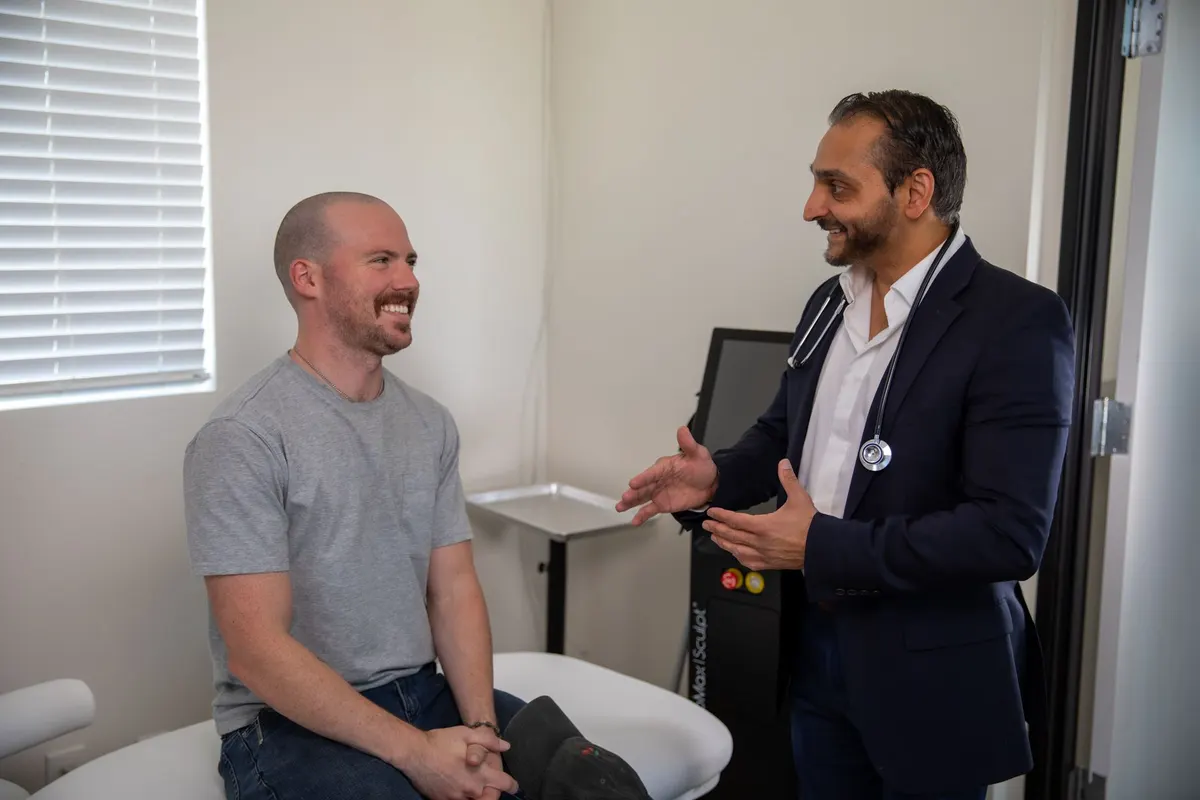
Two work at the level of the tissue and two support your own growth hormone release, and your assessment decides which, if any, fits your training, your history, and your goals.
Start with a free assessmentThe go-to for muscle repair and exercise recovery.
Explore BPC-157BPC-157 plus TB-500 for athletes and active lifestyles that demand more.
Explore Wolverine BlendGrowth hormone support that improves recovery and sleep quality together.
Explore Tesamorelin / IpamorelinLong-term recovery and energy support through natural growth hormone release.
Explore SermorelinFrom the blog
No human trial has tested BPC-157 with TB-500, and a 2026 rat study found no added benefit. The evidence, the FDA and WADA status, and what helps injuries heal.
Read the articleFrom the blog
Sermorelin raises growth hormone in minutes and IGF-1 within about 2 weeks, but studies show body changes take 3 to 6 months and are modest. The evidence.
Read the articleRelated concern
Support for tendons, ligaments, and joints
Explore the concern
Your free assessment is the first step.
Medically reviewed by Dr. Bhavesh Patel, D.O.. This page is for education and is not a substitute for a personalized medical consultation. Last updated .