
Supports lean muscle development and body composition.
Explore Tesamorelin / IpamorelinYou train consistently and eat well, and the muscle still comes slower than it used to, or slips a little each year even though nothing about your routine has changed. Part of that is the natural decline in growth hormone that comes with age. Rx2BFIT offers physician-guided peptide therapy that supports your body's own growth hormone release, alongside the training that does the real work.
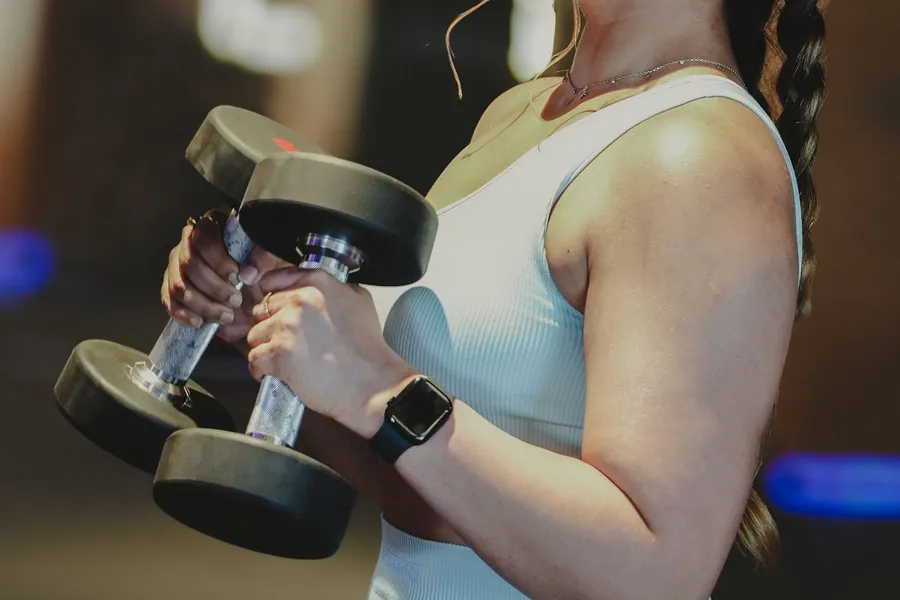
Muscle is not built in the gym. Training is the signal, and the building happens afterward, in recovery. Growth hormone is one of the hormones involved in that repair work. Your pituitary gland releases it in short bursts, the largest of them at night during sleep, and it prompts the liver and other tissues to make IGF-1, the hormone that carries out much of its effect on muscle, bone, and fat.
That output does not hold steady through life. Growth hormone secretion falls by roughly 15 percent per decade after your twenties, mostly because the nighttime bursts get smaller, and IGF-1 falls along with it. Studies in healthy older men found that the pituitary itself could still release as much growth hormone as a young man's when it was given the right prompt. What had faded was the signal from the brain telling it to.
That finding is the reasoning behind growth hormone releasing peptides. They do not add growth hormone to your body. They imitate the natural signals that ask your own pituitary to release it, so the body's normal feedback controls stay in place. Our guide to how long sermorelin takes to work walks through what the studies measured, and when.
Peptides support the process. They do not replace resistance training, enough protein, and sleep, which remain the most effective ways to build and keep muscle at any age.
The brain uses two separate “go” signals to trigger a burst of growth hormone. One is growth hormone releasing hormone, or GHRH. The other works through the ghrelin receptor. The treatments we use for this concern act on one or both, and all are given as small injections under the skin.
Tesamorelin / Ipamorelin pairs one of each. Tesamorelin is a synthetic version of GHRH, and it has the largest body of trial evidence in this family. In the studies that led to its FDA approval, for reducing excess abdominal fat in adults with HIV-associated lipodystrophy, deep belly fat fell while lean body mass rose by a little over a kilogram in six months. Using it for general body composition goals is off-label. Ipamorelin acts on the ghrelin receptor. It is not FDA approved for any use, its human research is limited, and the pairing itself has not been tested in a clinical trial, so it is something Dr. Patel discusses openly before it becomes part of a plan.
Sermorelin is the simpler option: a copy of the first 29 amino acids of GHRH, the portion that does the signaling. In small studies of older adults, sermorelin raised growth hormone, and in some studies IGF-1 rose within about two weeks. One 16 week trial of a close analog found a modest gain in lean mass in men, though not in women. It is not FDA approved, and the sermorelin Rx2BFIT uses comes from a U.S.-based supplier whose batches are independently tested for identity and purity, with a certificate of analysis on file, not from a compounding pharmacy. It suits patients who want steady, long-term support for recovery and healthy aging more than a focus on body composition.
It is worth being plain about the evidence. These peptides reliably raise growth hormone, and in studies they have shifted lean mass on a body scan by a small amount. No published trial has shown that they increase strength on their own, and some of the lean mass measured on a scan may be retained water, not new muscle. The strength comes from your training. The reasonable hope for therapy is that it supports the recovery that training depends on.
The timeline is slow. Hormone levels respond within weeks, but in the research, changes in body composition were measured after three to six months of consistent use, and they were modest. The choice between the two treatments usually comes down to your goals: the pairing when body composition and abdominal fat are the priority, sermorelin when the aim is gentler, longer-term support.
Side effects tend to be mild. The most common are redness or soreness at the injection site and brief facial flushing. Because these treatments raise growth hormone and IGF-1, they can also cause fluid retention, joint aches, or higher blood sugar, which is why they belong under medical supervision with appropriate lab work. They are not suitable for anyone with active cancer or who is pregnant or breastfeeding, and all of them are prohibited in drug-tested sport. Long-term safety has not been established.
A consultation is required to determine eligibility and the most appropriate treatment plan.
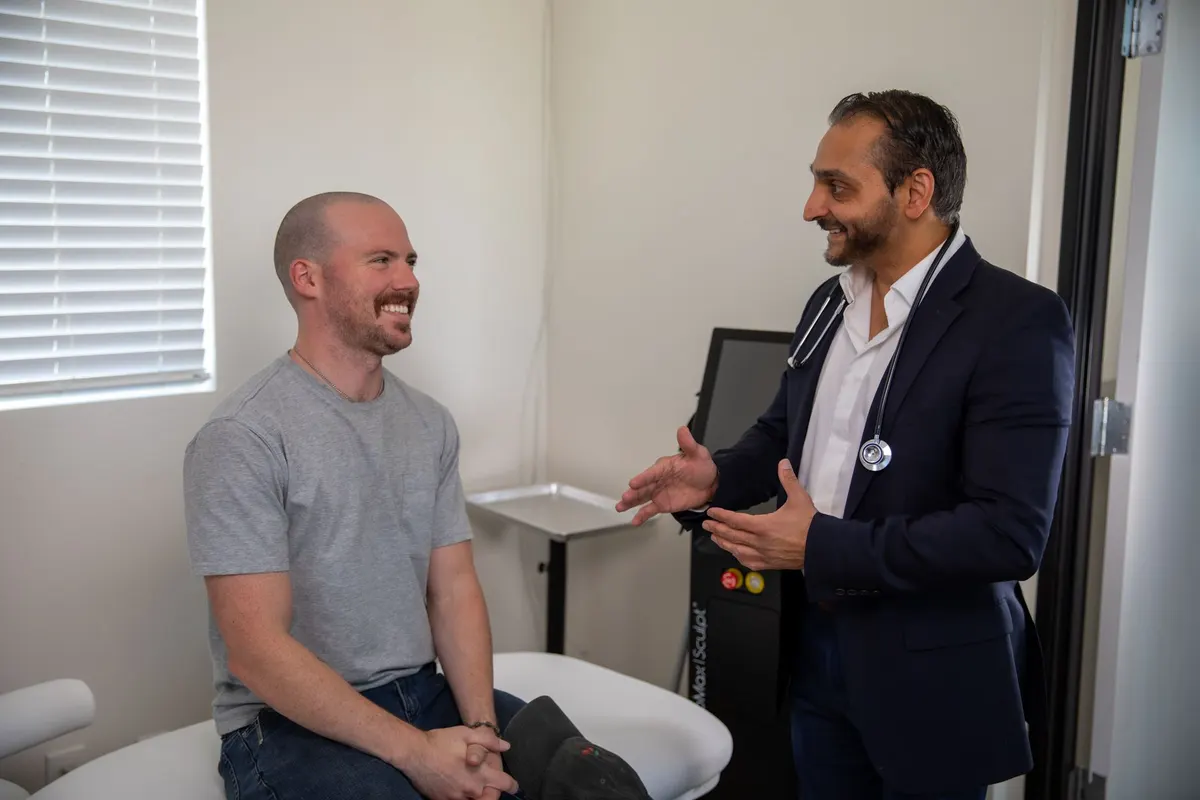
Both work by prompting your own growth hormone release, and your assessment with Dr. Patel decides which one fits your training, your health history, and your goals.
Start with a free assessmentSupports lean muscle development and body composition.
Explore Tesamorelin / IpamorelinNatural growth hormone support for muscle recovery and healthy aging.
Explore SermorelinFrom the blog
Sermorelin signals your pituitary to release its own growth hormone. HGH is the hormone itself. How they differ in evidence, FDA status, law, and risk.
Read the articleFrom the blog
Ipamorelin is an unapproved growth hormone secretagogue. What the human studies show, why the FDA restricted it for compounding, and the real risks.
Read the articleRelated concern
Body composition, not just a lower number
Explore the concern
Your free assessment is the first step.
Medically reviewed by Dr. Bhavesh Patel, D.O.. This page is for education and is not a substitute for a personalized medical consultation. Last updated .