Commonly used for tendon, ligament, joint, and connective tissue recovery.
Explore BPC-157You rested it, iced it, and did the exercises, and the tendon or joint still complains every time you ask something of it. Connective tissue is the slowest tissue in the body to repair, which is why these injuries drag on long after a pulled muscle would have cleared. Rx2BFIT offers physician-guided peptide therapy intended to support your body's own repair process, alongside the rehabilitation that does the heavy lifting.

Tendons connect muscle to bone, and ligaments connect bone to bone. Both are dense ropes of tightly aligned collagen, built for strength and not for fast repair. Compared with muscle they have few cells and few blood vessels, which means fewer workers and fewer supply lines when something tears or wears down.
Healing moves through three overlapping phases: a few days of inflammation, a few weeks of laying down new and fairly disorganized collagen, and then months to years of remodeling. Even at the end, the repaired tissue is closer to a scar than to the original, which is one reason the same ankle, elbow, or shoulder tends to get hurt again.
It also matters which problem you have. A fresh tear is different from tendinopathy, the gradual overuse pain behind most cases of tennis elbow, Achilles pain, and sore rotator cuffs. For tendinopathy, carefully progressed strengthening has the strongest human evidence of any treatment, and it is slow, with programs measured in months. Our article on BPC-157 for tendon and ligament injuries walks through what the research does and does not show.
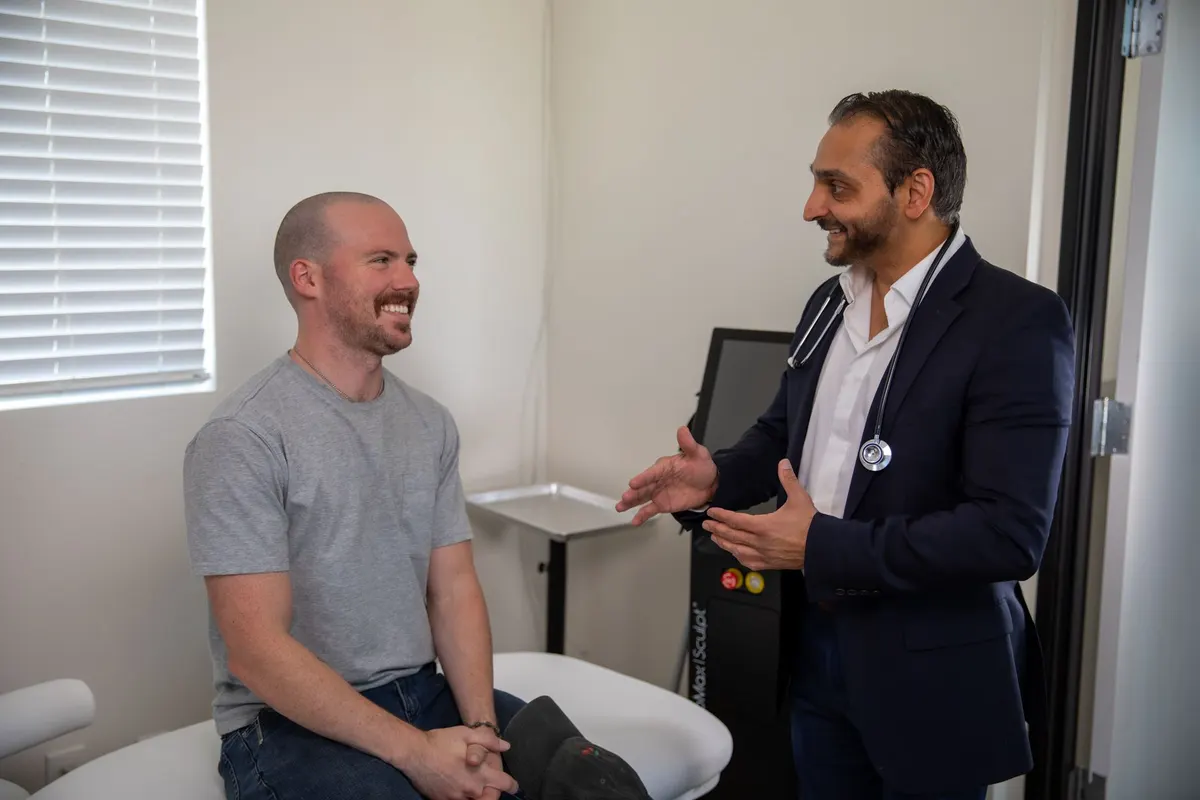
Peptide therapy does not replace a diagnosis or a rehab plan. The free assessment with Dr. Patel looks at whether it has a sensible place next to yours.
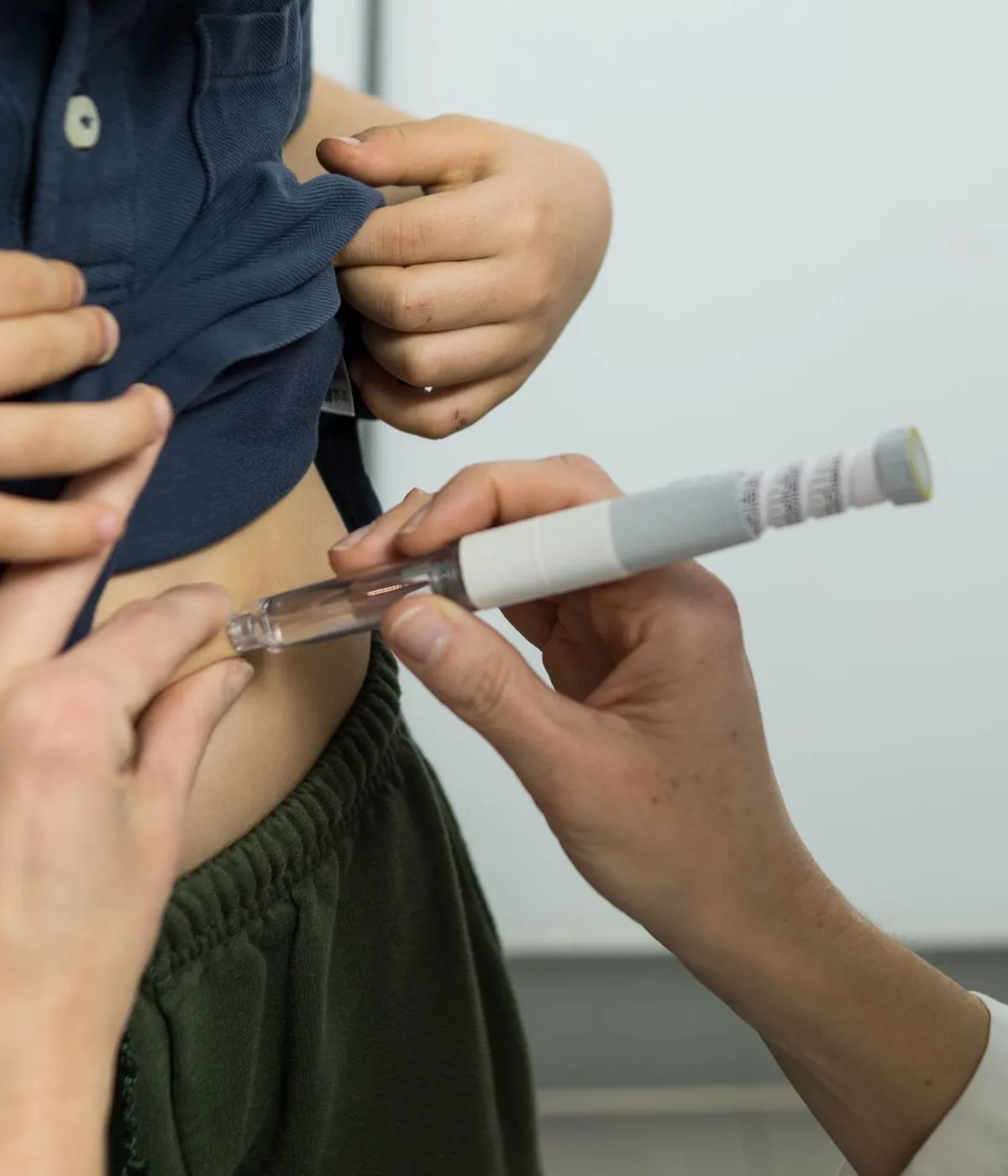
Peptides are short chains of amino acids that act as signaling molecules in the body. The two we use for this concern are studied for their effects on how soft tissue repairs itself. Both are given by subcutaneous injection, and both are investigational: neither is approved by the FDA for any medical use.
BPC-157 is a synthetic peptide based on a protein found in the stomach. It is commonly used to support recovery of tendons, ligaments, joints, and connective tissue. In laboratory work it helped tendon cells survive stress and move toward an injury, and in rat studies treated tendons and ligaments healed with better strength and function than untreated ones. Those results are in animals. No controlled human trial has tested it for a tendon or ligament injury yet.
The Wolverine Blend combines BPC-157 with TB-500, a synthetic fragment of thymosin beta-4, a natural protein involved in how cells move. The two are paired because they are thought to act on different parts of the healing process: BPC-157 at the injured tissue itself, TB-500 on how repair cells travel to it. That reasoning is still ahead of the evidence. The pairing has not been tested in a human trial, and the one animal study that compared them directly did not find that the combination did better than either peptide alone.
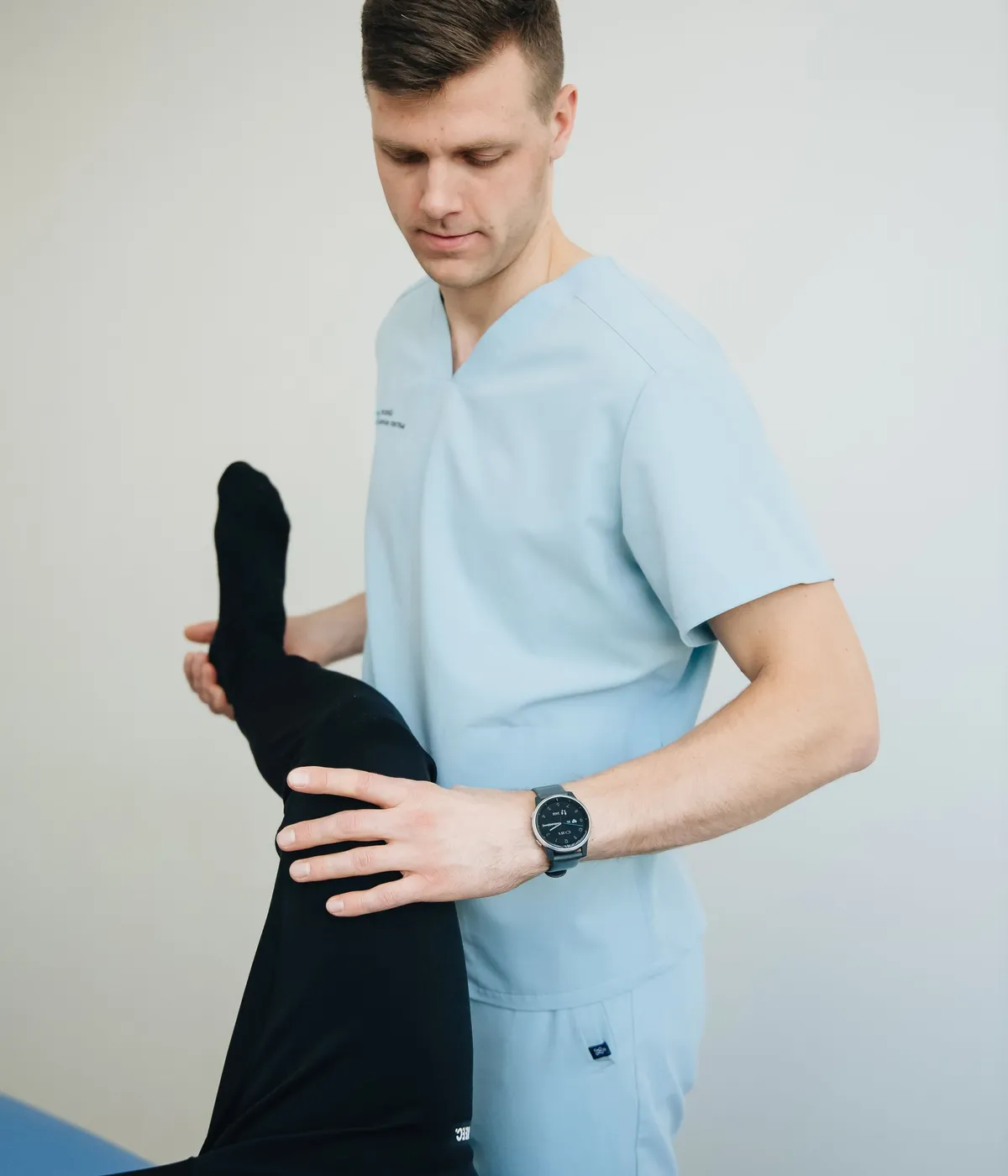
The starting point is the injury, not the peptide. It helps to know what you are dealing with: an overuse tendinopathy, a partial tear, a complete tear, or a joint problem. A sudden pop followed by weakness, or not being able to bear weight, needs prompt medical assessment before anything else. For most patients BPC-157 on its own is the first conversation, and the blend comes up after a significant injury or surgery, with your surgical history in view.
Be realistic about what is known. Most of the research on these peptides comes from laboratory and animal studies, human data is limited, and no human study has measured how long they take to work. Injection site reactions such as redness or mild soreness can occur, and because long-term safety has not been established, Dr. Patel will ask about your history, including any past cancer, clotting or liver problems, and pregnancy. Report any unexpected symptoms while you are on treatment.
Two more things are worth knowing early. If you compete in a drug-tested sport, both peptides are prohibited at all times under anti-doping rules, and a prescription does not change that. And nothing in the evidence suggests an injection replaces progressive loading, physical therapy, or a surgical opinion for a complete tear. Peptides are not shortcuts. At most they are one part of a plan built around rehabilitation.
A consultation is required to determine eligibility and the most appropriate treatment plan.
Listed in the order we usually discuss them for tendon, ligament, and joint concerns. Your assessment decides whether either one belongs in your recovery plan.
Start with a free assessmentCommonly used for tendon, ligament, joint, and connective tissue recovery.
Explore BPC-157The step up for soft tissue recovery after injury or surgery.
Explore Wolverine BlendFrom the blog
BPC-157 is an unapproved synthetic peptide. See what the rat studies show, how little human evidence exists, and its FDA and anti-doping status in 2026.
Read the articleFrom the blog
No human trial has tested BPC-157 with TB-500, and a 2026 rat study found no added benefit. The evidence, the FDA and WADA status, and what helps injuries heal.
Read the articleRelated concern
Bounce back faster between workouts
Explore the concern
Your free assessment is the first step.
Medically reviewed by Dr. Bhavesh Patel, D.O.. This page is for education and is not a substitute for a personalized medical consultation. Last updated .