Improves metabolic function alongside fat loss, which is often where a plateau lives.
Explore TirzepatideYou are eating the same way and training the same way, and the scale has not moved in weeks. A plateau feels like something you are doing wrong, but it is usually your body adjusting to the weight you have already lost. Rx2BFIT looks at what has changed in your appetite, your metabolism, and your body composition, then builds a structured, physician-guided next step.
Almost everyone who loses weight hits a plateau. A smaller body needs less energy than a larger one, so the calorie gap that produced your early progress narrows as the pounds come off. The plan that worked at your starting weight slowly becomes the plan that maintains your current one.
Your hormones push in the same direction. After weight loss, the hormones that signal fullness, including leptin, fall, and ghrelin, the main hunger hormone, rises. Researchers who followed dieters found most of those changes still in place a year later. Your body is defending its previous weight, which makes the same portions feel smaller and the same effort feel harder.
Plateaus happen on medication too. In the largest tirzepatide trial, people who kept taking it typically stopped losing somewhere between six and nine months in, and they held that loss for as long as treatment continued. Our guide to how tirzepatide works covers that research. A plateau is an expected phase, not a sign that you or the treatment have failed.
The useful question is what kind of plateau you are in: appetite creeping back, metabolic health holding you up, or a scale that hides changes in fat and muscle. That is what the free assessment with Dr. Patel sorts out.
The treatments we consider for a plateau do not do the same job. One is a once-weekly medication from the GLP-1 family that works on appetite and metabolism. The other is a peptide pairing aimed at body composition rather than the number on the scale.
Tirzepatide imitates two gut hormones, GIP and GLP-1. Together they lower appetite and calorie intake, and the medication also improves how the body responds to insulin. That combination is why it is often the first option Dr. Patel considers when diet and exercise alone have stalled.
Tesamorelin / Ipamorelin works differently. Both peptides prompt your body to release its own growth hormone. In clinical trials in adults with HIV-related abdominal fat, which is tesamorelin's only FDA-approved use, it reduced the deep visceral fat around the organs while body weight stayed about the same. Using it for general body composition is off-label, and the evidence outside that group is limited. Ipamorelin is not FDA approved, and the pairing itself has not been tested in a clinical trial. It may support fat distribution and lean muscle. It is not a weight loss drug.

The right lever depends on where the plateau comes from. If hunger has returned or blood sugar and insulin are part of the picture, a GLP-1 based medication usually makes more sense. If your weight is already close to your goal and your concern is abdominal fat or holding on to muscle, the conversation may turn to body composition instead. Your health history and current medications narrow the options further.
Each option has limits. The GLP-1 family mostly causes digestive side effects such as nausea, vomiting, diarrhea, or constipation, most often while the dose is being increased, which is why dosing steps up gradually. Tesamorelin raises IGF-1 and can raise blood sugar, so it calls for periodic blood work, and it is not used in anyone with active cancer. Some people should not take a GLP-1 medication at all: anyone with a personal or family history of medullary thyroid cancer or MEN syndrome, a history of bowel obstruction, or an allergy to it. That is screened for at the first visit.
It helps to be realistic about the finish line. Weight does not fall forever on any treatment, and part of what comes off is lean mass, not only fat. Eating enough protein and keeping up resistance training helps protect muscle. The benefits also depend on continuing: in trials, people who stopped tirzepatide regained much of their weight within a year, and visceral fat returned within months of stopping tesamorelin. A plan for maintaining your results matters as much as a plan for restarting them.
A consultation is required to determine eligibility and the most effective treatment plan.
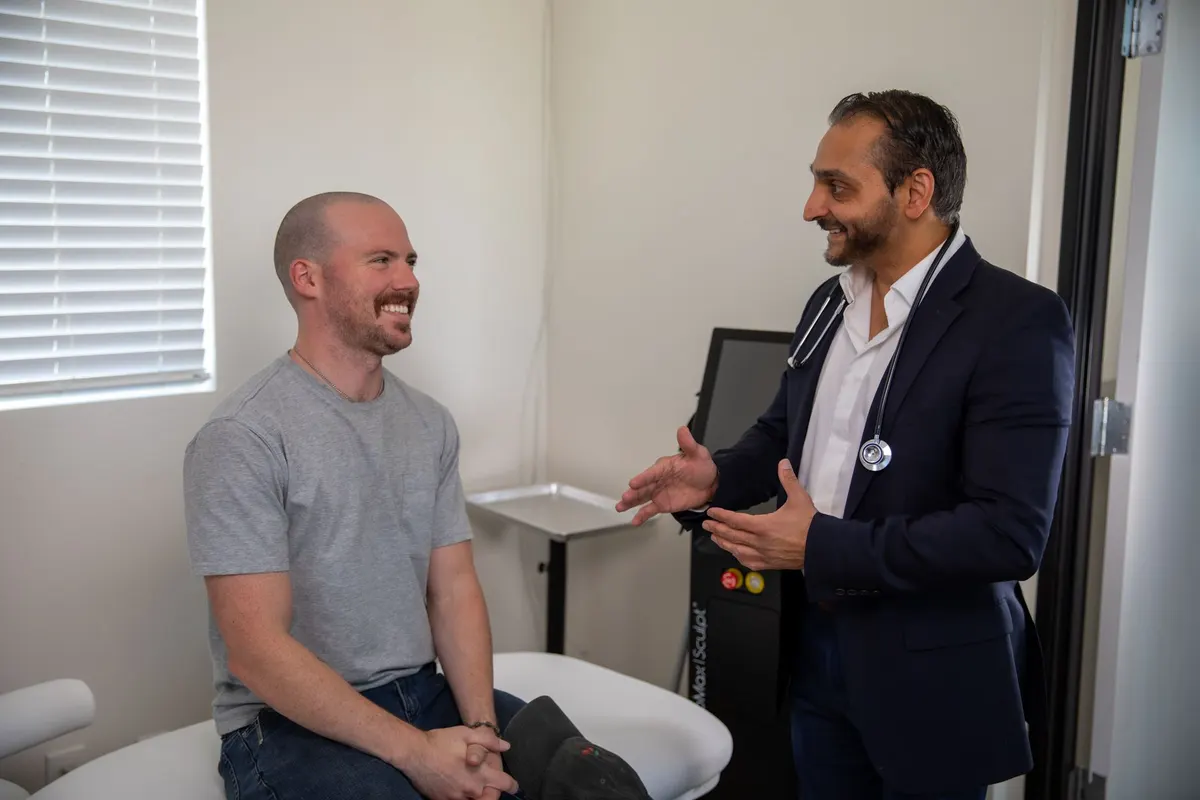
These are the options Dr. Patel most often weighs when progress has stalled, and your assessment decides which one fits your body, your history, and your goals.
Start with a free assessmentImproves metabolic function alongside fat loss, which is often where a plateau lives.
Explore Tirzepatide
Supports visceral fat reduction and lean muscle so the scale keeps moving the right way.
Explore Tesamorelin / IpamorelinFrom the blog
Tirzepatide activates both GIP and GLP-1 receptors. How that lowers appetite and blood sugar, the label dose schedule, trial results, and key risks.
Read the articleFrom the blog
Tesamorelin cut visceral fat about 14 to 18 percent in HIV lipodystrophy trials, without weight loss, and the fat returned after stopping. The evidence.
Read the articleRelated concern
Body composition, not just a lower number
Explore the concern
Your free assessment is the first step.
Medically reviewed by Dr. Bhavesh Patel, D.O.. This page is for education and is not a substitute for a personalized medical consultation. Last updated .