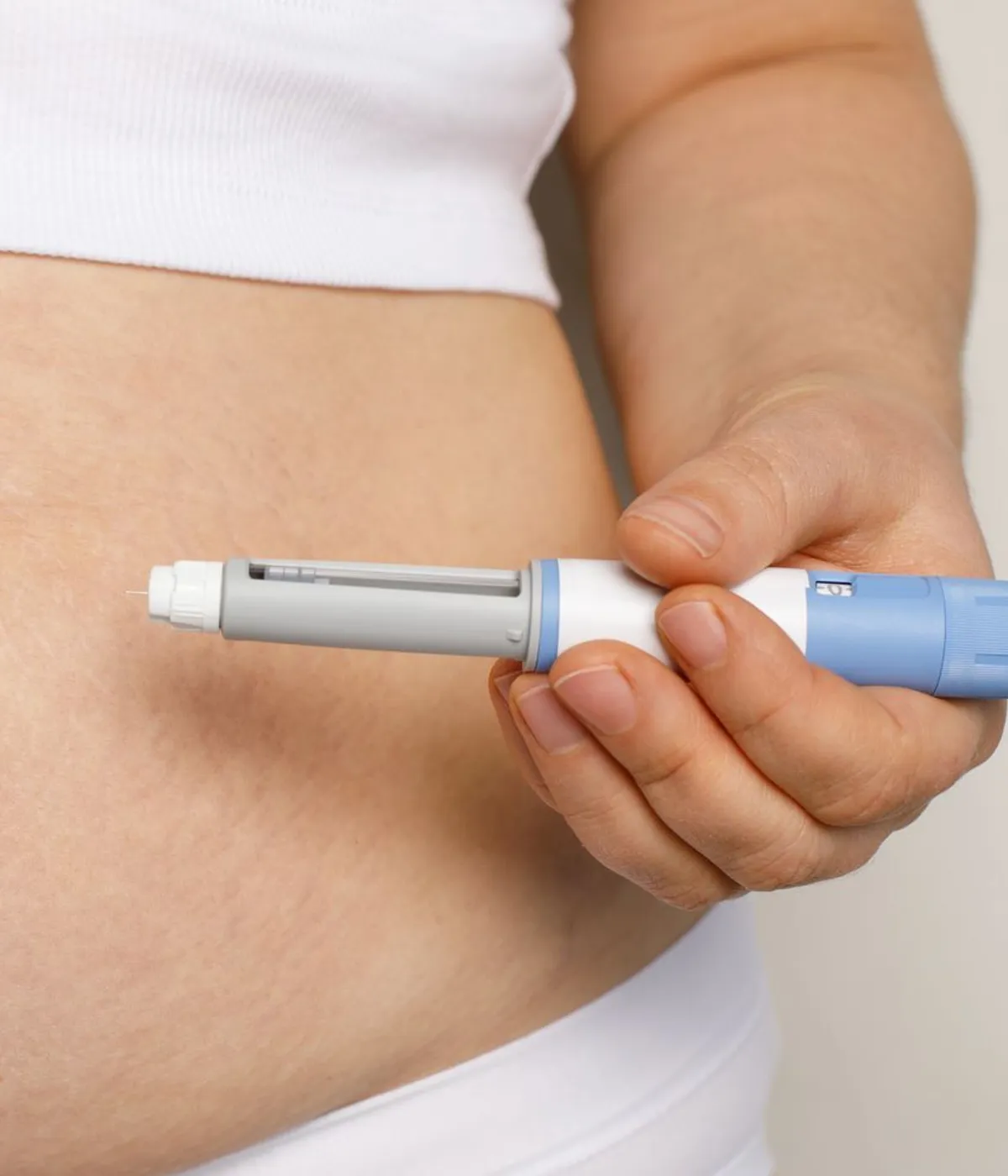
The starting point for most first-time medical weight loss patients: appetite control and long-term management.
Explore SemaglutideMost weight loss efforts fail because they rely on discipline alone. If you are always hungry, fighting cravings, and watching the weight come back, the problem is usually appetite regulation, not willpower. Rx2BFIT treats it with physician-guided medication that works with your body's own hunger signals.

Hunger is not a character flaw. It is a signal, set by hormones that travel between your gut, your fat stores, and your brain. One of them, ghrelin, rises before meals and tells you to eat. Others, including GLP-1 and leptin, rise after you eat and tell you that you have had enough. When those signals are working against you, eating less feels like holding your breath: possible for a while, then not.
Dieting tends to make it harder, not easier. As you lose weight, the body defends its old set point by turning hunger signals up and fullness signals down, and studies that followed dieters found those shifts still in place a year later. That is why the last ten pounds feel harder than the first ten, and why the weight so often returns once the diet ends. It is biology doing its job, not discipline failing at its own.
Medical treatment works on the signal itself. GLP-1 based medications mimic the body's own fullness hormones, which quiets appetite and cravings and slows digestion so meals hold you longer. Our guide to how GLP weight loss injections work covers the mechanism in detail. The result is less reliance on willpower and steadier, more predictable fat loss.
Which medication fits, and at what dose, depends on your health history and how your body responds. That is what the free assessment with Dr. Patel sorts out.
Both medications we use for this concern belong to the same family. Each one imitates hormones your gut already releases after a meal, and each is a once-weekly injection. Where they differ is in how many of those hormone pathways they act on.
Semaglutide acts on one: GLP-1. It tells the brain you are full sooner, turns down the background noise of cravings, and slows how quickly the stomach empties, so a normal portion holds you for longer. It has the longer track record of the two, which is why it is where most first-time patients begin.
Tirzepatide acts on two: GLP-1 and a second gut hormone called GIP. The appetite effect is similar, with added support for how the body handles insulin and blood sugar. It is often the choice when hunger is only part of the picture and metabolic health needs attention too.
More pathways does not automatically mean better for you. In a head-to-head trial tirzepatide produced more weight loss on average than semaglutide, but averages hide a wide range, and plenty of patients do very well on the first medication they try. The right choice depends on your health history, your other medications, and how much metabolic support you need alongside appetite control.
The side effects are shared across the family and are mostly digestive: nausea, fullness, constipation, or loose stools. They are most likely in the weeks after a dose increase and tend to settle as the body adjusts. That is why every plan starts at a low dose and steps up gradually, and why regular check-ins matter. Dr. Patel can prescribe an anti-nausea medication if you need it. Some people should not take these medications at all: anyone with a personal or family history of medullary thyroid cancer or MEN syndrome, a history of bowel obstruction, or an allergy to the medication. That is screened for at the first visit.
It also helps to think past the first few months. Studies show that when these medications are stopped, appetite returns and much of the weight tends to follow, so the plan for maintaining your results matters as much as the plan for getting them. Eating enough protein, keeping up resistance training, and taking vitamin D, B12, and collagen protects muscle and skin while the fat comes off, which is why Dr. Patel asks every patient to do all four.
A consultation is required to determine eligibility and the most effective treatment plan.

Listed in the order we most often recommend them for appetite and cravings. Your assessment decides which one actually fits your body, your history, and your goals.
Start with a free assessmentThe starting point for most first-time medical weight loss patients: appetite control and long-term management.
Explore SemaglutideDual-action support for greater fat loss when appetite alone is not the whole problem.
Explore TirzepatideFrom the blog
Tirzepatide led to more weight loss than semaglutide in a head-to-head trial, but semaglutide has more heart outcome data. See the evidence side by side.
Read the articleFrom the blog
After stopping semaglutide, trials show about two-thirds of lost weight returns within a year as appetite rebounds. What the data say and how to plan for it.
Read the articleRelated concern
A structured next step when diet and exercise stall
Explore the concern
Your free assessment is the first step.
Medically reviewed by Dr. Bhavesh Patel, D.O.. This page is for education and is not a substitute for a personalized medical consultation. Last updated .