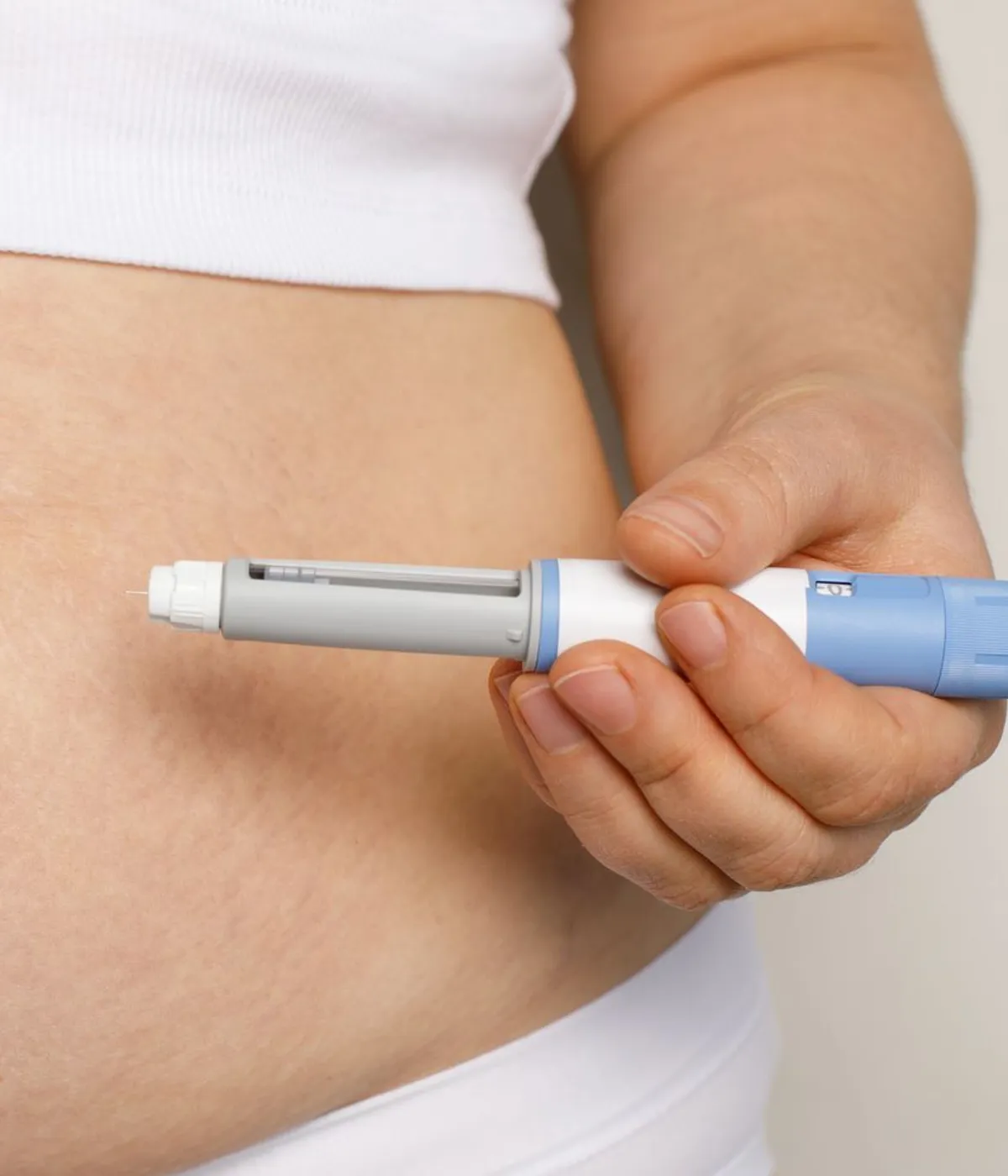
The GLP-1 with a liver indication: an FDA-approved semaglutide product is approved for MASH with scarring.
Explore SemaglutideFatty liver rarely announces itself. It shows up as a slightly high liver enzyme on a routine panel, or not at all, while the cholesterol and blood sugar numbers around it slowly drift. Most people with prediabetes or high cholesterol already have it. Rx2BFIT treats it as what it is: the condition underneath the weight, and the one worth getting ahead of.

Fatty liver disease means fat has built up inside liver cells in someone who drinks little or no alcohol. In its early form it is called MASLD, and when the fat starts to inflame and scar the liver it becomes MASH, which you may also see written as NASH. Left alone, that scarring can progress to cirrhosis. Cirrhosis is usually thought of as an alcohol problem, but metabolic disease, meaning obesity, type 2 diabetes, and the insulin resistance that precedes both, is now one of its most common causes.
The liver is where the metabolic picture comes together. The same insulin resistance that raises blood sugar tells the liver to store fat and to make more of the triglycerides and LDL cholesterol that show up on a lipid panel. That is why Dr. Patel treats a fatty liver as the priming condition behind the diseases that shorten lives: heart disease and stroke, type 2 diabetes, several cancers, and cognitive decline. Treat the liver early and you are treating all of them at once.
The lever that works is weight loss, and specifically fat loss from the trunk and the liver itself. Losing around ten percent of body weight reduces liver fat in most people and can reverse early scarring. That is hard to do on willpower alone, which is where a GLP-1 based medication earns its place: it lowers appetite, the weight comes off, and the liver follows.
A fatty liver diagnosis is a reason to take the whole plan seriously, not only the prescription: alcohol at zero or close to it, no smoking or vaping, real sleep, protein, and strength training.
Both are once-weekly injections that imitate the gut hormones your body uses to manage appetite and blood sugar. Their effect on the liver comes partly from the weight loss and partly from better insulin sensitivity, which tells the liver to stop stockpiling fat.
Semaglutide has the liver evidence. In 2025 the FDA approved a semaglutide product for MASH with moderate to advanced scarring, the first GLP-1 medication approved to treat the liver itself, after a trial in which more people on it saw their MASH resolve and their scarring improve than people on placebo. It also has the longest track record for protecting the heart, which matters when the liver and the heart share a cause.
Tirzepatide acts on two hormone pathways and produces more weight loss in head-to-head trials. In a mid-stage trial in people with MASH and scarring, a majority of those on tirzepatide had their MASH resolve compared with a small share on placebo. It is not yet approved for the liver specifically, and its long-term liver data are still coming in.
Neither product used at Rx2BFIT is the branded, FDA-approved medication. Dr. Patel goes over exactly what is dispensed, how it is tested, and what that means before anyone starts.
The first visit, in the office or by telehealth, is a proper history and physical followed by screening labs: hemoglobin A1c, a lipid panel, thyroid, and a comprehensive metabolic panel that reads liver and kidney function. If your own doctor ran these in the last six months, they count. Monitoring labs repeat about every six months on treatment.
Because a fatty liver and a stiff artery come from the same place, Dr. Patel recommends a coronary calcium score CT scan for patients with added risk factors, through your primary doctor or as a self-pay test if insurance will not cover it, and can point you to how to arrange it. For patients who qualify, he also refers to a grant-funded liver study at UC San Diego that runs a detailed liver workup at no cost, so treatment decisions rest on real measurements rather than guesses.
The usual GLP-1 cautions apply. Side effects are mostly digestive and mostly mild, and Dr. Patel can treat nausea if it turns up. Anyone with a personal or family history of medullary thyroid cancer or MEN syndrome, a history of bowel obstruction, or an allergy to the medication should not take it, and each of those is screened for before prescribing. Rapid weight loss also costs muscle unless you plan for it, so protein, strength training, and vitamin D, B12, and collagen are part of every liver plan here.
Bring your most recent labs to the free assessment. A consultation is required to determine eligibility and the most effective treatment plan.
Both are considered when the liver is part of the goal. Your labs, your scarring risk, your heart history, and the medications you already take decide which one fits.
Start with a free assessmentThe GLP-1 with a liver indication: an FDA-approved semaglutide product is approved for MASH with scarring.
Explore SemaglutideResolved MASH in a majority of participants in a mid-stage trial, with the larger weight loss that helps the liver most.
Explore TirzepatideRelated concern
Insulin sensitivity and steadier blood sugar
Explore the concernFrom the blog
Tirzepatide activates both GIP and GLP-1 receptors. How that lowers appetite and blood sugar, the label dose schedule, trial results, and key risks.
Read the articleFrom the blog
After stopping semaglutide, trials show about two-thirds of lost weight returns within a year as appetite rebounds. What the data say and how to plan for it.
Read the article
Your free assessment is the first step.
Medically reviewed by Dr. Bhavesh Patel, D.O.. This page is for education and is not a substitute for a personalized medical consultation. Last updated .